
Efficient bulk material handling is a critical requirement across industries such as mining, cement, ports, steel processing, agriculture, fertilizer production, recycling, and energy generation. As facilities continue to optimize material transportation processes, the need for conveyor systems capable of handling steep inclines and complex layouts has increased significantly.
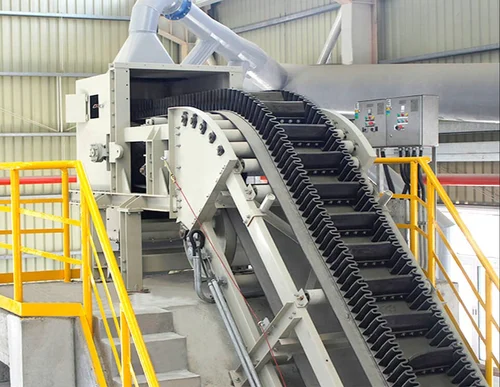
A sidewall belt conveyor provides an effective solution for moving materials horizontally, vertically, and on steep inclines while maximizing space utilization. Unlike conventional conveyor systems, a sidewall conveyor belt is specifically designed to transport materials at higher angles, helping facilities reduce transfer points and improve conveying efficiency.


At Monster Belting, we have been manufacturing sidewall conveyor belts for two decades, supplying customized solutions for industries that require reliable and efficient material handling systems. Understanding sidewall belt conveyor design is essential for engineers, procurement teams, and project managers responsible for selecting the right conveyor system for their applications.
sidewall belts in the following rubber qualities:
- highly abrasion-resistant
- oil and fat resistant
- heat resistant
- flame retardant
Overview:
- hot vulcanisation of cleats and sidewalls on the base belt
- maximum cleat and sidewall height 500 mm
- maximum width of belt 4500 mm
- delivered as endless belt or open length


Each component contributes to the overall strength and functionality of the conveyor system.
Technical data conveyor belts


Technical data cleats


Technical data sidewall


Base Belt Structure
The base belt serves as the foundation of the conveyor system. It supports the sidewalls and cleats while carrying the transported material.
Monster Belting manufactures sidewall conveyor belts using multi-ply rubber EP conveyor belts designed for demanding industrial environments.


Rubber Grade Comparison
| Property | W | M | Y | Z |
| Tensile Strength (N/mm²) | 18 | 24 | 20 | 15 |
| Elongation at Break (%) | 400 | 450 | 400 | 350 |
| Abrasion (mm³) | 90 | 120 | 150 | 250 |
These rubber grades provide options for different industrial environments and material handling conditions.
Relavant Product :
Coal Feeder Belt with Flexco Alligator RS187S Fastener
This customized coal feeder belt is professionally engineered for coal feeding systems in thermal power plants, coal washing plants, cement plants, metallurgical factories and other core industrial scenarios. The complete set is delivered with pre-matched Flexco medium-duty stainless steel Alligator RS187S fastener assembly, realizing one-stop installation, stable operation and long service life. Adopting classic EP polyester canvas carcass and high-performance SBR rubber cover, combined with integrated molded edge technology, the belt perfectly adapts to continuous, high-frequency and medium-load coal feeding working conditions, effectively solving common problems such as belt deviation, edge damage and unstable splicing in traditional coal feeder belts


Technical Specifications
| Item | Detailed Parameter |
|---|---|
| Product Name | Coal Feeder Belt Complete with Flexco Joint |
| Brand Name. | Monster Belting |
| Belt Width | 910 ~920 mm |
| Carcass Structure | EP220/2, 3+1.5 (Top cover 3 mm, Bottom cover 1.5 mm) |
| Total Belt Thickness | 8 mm |
| Cover Rubber Grade | SBR (Styrene Butadiene Rubber, general wear-resistant grade) |
| Belt strength | 220 N/mm |
| Edge Type | Molded Edge |
| Splicing Fastener | Flexco Medium Duty Stainless Steel Alligator Fastener No.187S |
| Fastener Supporting Parts | Ball and Bullet Nylon Coated Stranded Cable + Matching Flanges |
| Applicable Minimum Pulley Diameter | 102 mm (4 inches) |
| Rated Working Tension | Up to 35 kN/m (200 PIW) |
| Adapted Belt Thickness for Fastener | 4.8 mm ~ 6.4 mm (Matching the operating range of the belt) |
Product Advantages
SBR Rubber Cover, Excellent Wear Resistance for Coal Handling
Formulated with high-quality SBR styrene-butadiene rubber, the cover boasts outstanding anti-abrasion, anti-aging and anti-fatigue properties. It can cope with the long-term scouring and friction of lump coal, coal powder and mixed coal materials, effectively delaying rubber aging and surface wear. It adapts to conventional indoor and semi-outdoor coal feeding environments, with stable physical properties and no softening or hardening failure under normal temperature working conditions, fully meeting the daily operation requirements of coal feeders.


Integrated Molded Edge, Anti-tear & Anti-deviation
Built-in Molded Edge (molded height 2) is formed by integral vulcanization, different from traditional cut edges or glued edges. The integrated structure eliminates edge cracking, delamination and fraying caused by long-term friction and deviation. It greatly enhances the lateral rigidity of the belt, effectively restrains belt deviation during high-speed operation of the coal feeder, reduces maintenance frequency, and extends the overall service life of the belt.


Matched Flexco RS187S Alligator Fastener, Reliable Splicing & Easy Installation


Equipped with original Flexco RS187S medium-duty stainless steel Alligator staple fastener, a mainstream mechanical splicing solution for medium-load conveyor belts worldwideFlexco China ZH:
- Stainless steel material: Anti-rust and anti-corrosion, adapting to humid and dusty coal industry environments, avoiding fastener rust and failure;
- Nylon coated stranded cable: Ball and bullet type hinge pin with nylon coating reduces friction, prevents scratching the roller and belt, and operates silently and smoothly;
- One-piece fastener strip: Pre-installed staples simplify on-site installation, shorten equipment downtime, and the splice is low-profile without hanging materials;
- Supporting flanges: Auxiliary positioning to ensure the firm combination between the fastener and the belt, no loosening or tripping during reciprocating operation of the coal feeder.The fastener is specially designed for belts with a thickness of 4.8–6.4 mm, with a minimum applicable pulley diameter of 102 mm, which is perfectly matched with the operating parameters of this coal feeder belt, and the splicing strength reaches the standard of the belt body.


Quality Control in Sidewall Conveyor Belt Manufacturing
Quality is a major consideration when selecting a sidewall conveyor belt supplier.
Monster Belting follows a strict quality control process throughout production.
Raw Material Inspection
All purchased raw materials are supplied with quality test certificates.
This helps ensure consistency before production begins.
Semi-Finished Product Testing
Every semi-finished product is tested before proceeding to the next manufacturing stage.
Unqualified products are not allowed to continue through the process.
Finished Product Testing
All finished products undergo inspection and testing before shipment.
Only qualified products leave the factory.


Quality Checks Include
- Dimension verification
- Hardness testing
- Surface treatment inspection
- Non-destructive testing
- Product performance evaluation
These procedures help maintain consistent product quality.
Industries Using Sidewall Belt Conveyor Systems
The versatility of sidewall conveyor belt systems makes them suitable for many industries.
Aggregate and Mining
Mining operations often require efficient transportation of bulk materials across challenging terrain.
A sidewall belt conveyor can help improve material movement while supporting steep incline conveying.
Cement Industry
Cement facilities require continuous movement of raw materials and finished products.
Sidewall conveyor belts can help manage these transportation requirements efficiently.
Steel and Metals
Steel processing operations frequently handle heavy materials and require dependable conveyor systems.
Energy and Thermal Power
Power generation facilities often transport materials through complex layouts where steep incline conveying is beneficial.
Fertilizer and Chemicals
These industries require efficient bulk material handling systems that help maintain productivity.


Ports
Port operations depend on reliable material transportation systems for loading and unloading activities.
Agriculture
Agricultural facilities use conveyor systems for handling various bulk materials.

Scrap and Recycling
Recycling operations benefit from conveyor systems capable of handling varying material types and transportation paths.


Benefits of Corrugated Sidewall Belt Conveyor Systems
There are several advantages associated with corrugated sidewall belt conveyor systems.
Supports Multiple Conveying Angles
The system can handle:
- Horizontal conveying
- Vertical conveying
- Steep incline conveying
Reduces Material Spillage
Corrugated sidewalls help keep materials contained throughout transportation.
Efficient Space Utilization
Facilities can transport materials within compact layouts.
High Resistance to Breakage
Monster Belting sidewall conveyor belts are designed with strong tensile strength characteristics that help reduce damage potential.
Customizable Design
Various belt widths, sidewall heights, cleat heights, and fabric constructions allow customization for specific applications.
Why Choose Monster Belting Sidewall Conveyor Belts?
Monster Belting has been manufacturing sidewall conveyor belts for two decades and serves customers across multiple industries.
Key advantages include:
Customized Solutions
We manufacture conveyor belts designed to meet different operational requirements.
Strict Quality Control
Every production stage follows a structured quality assurance process.
Product Testing
All products undergo testing before shipment.
Technical Support
Our team provides technical guidance and support for customers.
One-Year Warranty
Monster Belting offers a one-year warranty on sidewall rubber conveyor belts, with extended warranty options available through mutual agreement.
Related Conveyor Solutions
Depending on application requirements, customers may also explore other conveyor products from Monster Belting, including:
- Conveyor Belt
- Textile Conveyor Belts
- Steel Cord Conveyor Belts
- Pipe Conveyor Belt
- Fire Resistant Conveyor Belts
- Heat Resistant Conveyor Belt
- Oil Resistant Conveyor Belt
- Conveyor Roller
- Drum Pulley
These products can be incorporated into broader material handling systems where appropriate.
Conclusion
A well-designed sidewall belt conveyor can significantly improve bulk material transportation efficiency across mining, cement, steel, energy, fertilizer, agriculture, recycling, and port operations. By combining a durable base belt, corrugated sidewalls, and cleats, these systems support horizontal, vertical, and steep incline conveying while helping reduce material spillage and improve operational performance.
Understanding sidewall belt conveyor design allows engineering and procurement teams to select the most appropriate configuration based on belt width, sidewall height, cleat height, tensile strength, and application requirements. With two decades of manufacturing experience, strict quality control procedures, comprehensive product testing, and technical support, Monster Belting provides dependable sidewall conveyor belt solutions for demanding industrial environments.
For assistance selecting the right sidewall conveyor belt for your operation, Contact us and our team will be happy to discuss your requirements.
Frequently Asked Questions
1. What industries use sidewall conveyor belts?
Industries include mining, cement, steel and metals, energy, fertilizer and chemicals, ports, agriculture, and recycling.
2. What are the main components of a sidewall conveyor belt?
The primary components include the base belt, corrugated sidewalls, cleats, reinforcement fabric, and rubber cover compounds.
3. What fabric types are available for Monster Belting sidewall conveyor belts?
Available fabric types include EP100, EP150, EP200, EP250, EP300, and EP400.
4. How does Monster Belting ensure product quality?
The company follows strict quality control procedures, including raw material inspection, semi-finished product testing, and finished product testing.
5. Does Monster Belting provide technical support for sidewall conveyor belts?
Yes. Monster Belting provides technical support and guidance to help customers select suitable conveyor belt solutions.