
Most belt failures get blamed on the rubber, but the fabric buried inside is often the real culprit. Those plies carry the load, absorb the shock and decide how the belt behaves around every pulley. That is why fabric conveyor belts still dominate quarries, ports and processing plants, and why choosing the wrong fabric costs far more than choosing the wrong cover.
The good news is that the decision gets simple once you know what each fabric actually does. The bad news is that suppliers rarely explain it plainly, so here is the short version.
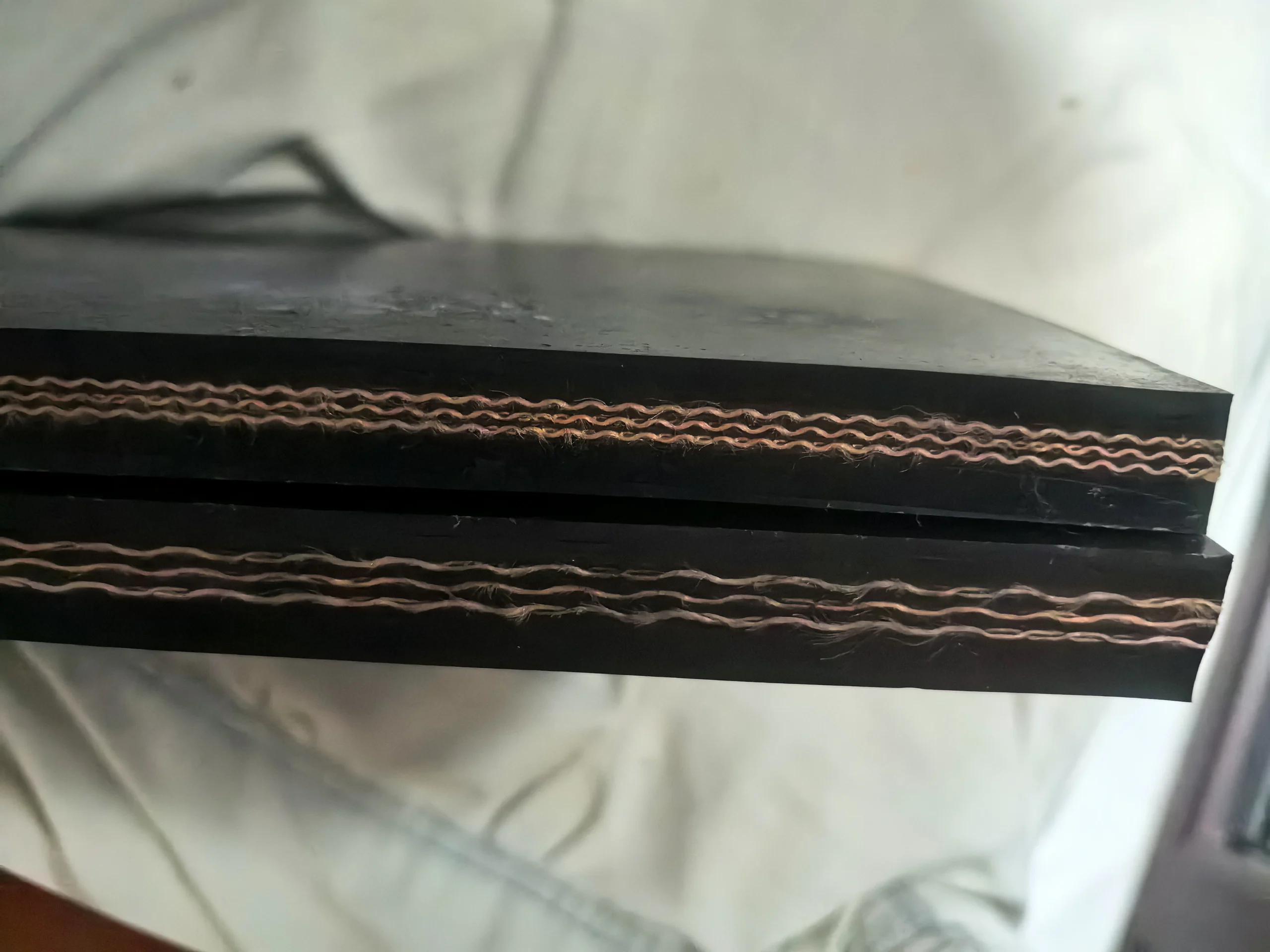
ST2000 Steel Cord Bucket Elevator System
This complete bucket elevator package consists of Elevator Belt, Aluminum Alloy Joint Clamp, Elevator Bucket Cushion Pad and Special Bucket Elevator Bolt. It is a heavy-duty, heat-resistant steel cord belt solution engineered for vertical bulk material lifting.
Technical Specifications
- Elevator Belt (Steel cord belt, ST=Steel Tensile)
ST2000, B680 × Φ6 (3+3), equipped with 1-layer anti-tear steel wire mesh SW (steel woven). Heat-resistant up to 150℃. All mounting holes are water jet cut strictly per factory drawing sheet, length L=90m. The steel cord core delivers ultra-high tensile strength and low elongation, resisting tearing and delamination under heavy load and high temperature.
- Aluminum Alloy Joint Clamp
Custom-designed for 680mm width ST2000 steel cord belt.
- Structure: built-in middle wedge block to support and fix belt layers, paired with clamping plate fasteners on both sides.
- Fittings: double-row M20 high-strength bolts + Philidas anti-loose self-locking nuts.

- Reinforcement: additional steel reinforced clamping plates to maximize tensile strength of belt joint. It provides a fast, reliable mechanical splice alternative for steel cord elevator belt.
- Elevator Bucket Cushion Pad (Buffer cushion pad)
6mm thick heat-resistant buffer cushion pad. Punching pattern processed strictly according to drawings. Installed on the back side of elevator belt to absorb impact and reduce shock when materials fall into buckets. All hole positions, dimensions are manufactured per technical drawing. It protects the belt core from impact damage and extends service life.

- Special Bucket Elevator Bolt
Compliant with DIN 15237 German bucket elevator standard.
Spec: length 60mm, inner hexagon European style bolt, big head outer diameter 42mm. Surface treated with hot-dip galvanized for anti-corrosion. All hole layout and dimensions follow drawing requirements. This standard fastener securely locks buckets onto the elevator belt, preventing rotation and bucket dropping during continuous operation.
Industrial Application
This ST2000 elevator belt set is widely deployed for vertical conveying of granular, powdery and small lump bulk materials:
- Cement & building materials: clinker, limestone, raw meal
- Mining & metallurgy: mineral aggregates, slag
- Power industry: coal, ash
- Chemical, grain processing and other heavy-duty bulk handling sectors
Suitable for continuous high-temperature working conditions, designed for heavy load vertical bucket elevators with strict safety and durability requirements.
Installation & Operation Guidance
Pre-installation Check
- Verify belt dimension, hole position and all components match equipment drawing. Inspect belt surface for cuts, core exposure before installation.
- Confirm all fasteners (bolts, self-locking nuts, cushion pads) are complete and free of corrosion.
Belt & Joint Installation
- Lay out the steel cord elevator belt, align two belt ends for joint connection. Mount the aluminum alloy joint clamp, insert the middle wedge block, fasten double-row M20 bolts and anti-loose self-locking nuts from center to both sides, apply specified torque evenly.
- Install buffer cushion pads on the back of belt at bucket mounting positions for shock absorption.
- Fit DIN15237 bucket elevator bolts through pre water-jet cut holes to fasten buckets firmly. Ensure bolt heads sit flush without protrusion.
Commissioning & Daily Maintenance
- Adjust belt tension properly; avoid over-tension which may overload steel cord core. Run no-load test first to check belt tracking and joint stability.
- Regular inspection points: joint clamp tightness, nut anti-loose status, cushion pad wear, belt surface abrasion.
- Clear accumulated material on buckets and belt to reduce abrasive wear. Stop operation immediately if tearing or delamination occurs.


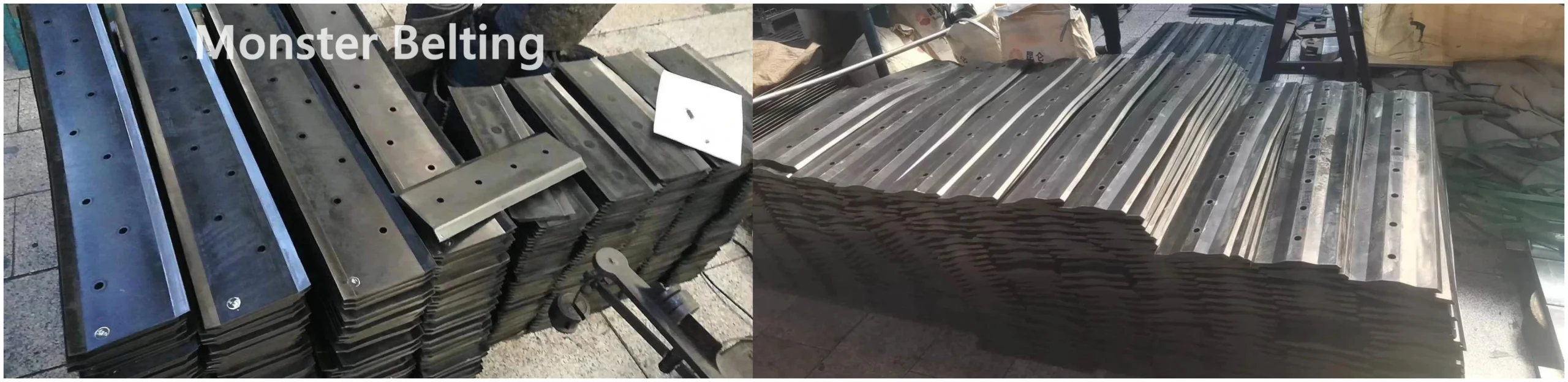

Key Advantages
✅ ST2000 steel cord belt with anti-tear steel wire mesh, high tensile strength, low elongation
✅ Heat-resistant up to 150℃ for hot bulk material conveying
✅ Precision water jet cut holes, accurate matching with bucket installation
✅ High-performance aluminum alloy joint clamp with reinforced steel plate for reliable belt splicing
✅ Hot-dip galvanized DIN15237 standard bolts + anti-loose self-locking nuts for secure bucket fixation
✅ Buffer cushion pad absorbs impact and protects belt from material shock damage

Types of Fabric Conveyor Belts
Not every fabric belt is built the same way, and the differences are bigger than the labels suggest. Three types cover most of what you will meet on site, and a short fabric conveyor belt comparison is worth reading before you place an order.

Polyester Conveyor Belt
EP belts are the workhorse. The polyester warp gives high tensile strength with very low stretch, usually under 1.5 percent at working load, which is why they suit long conveyors where take-up travel is limited. They also shrug off moisture and most chemicals, so they hold their strength in wet quarries and on outdoor stockpiles.
You will see them in cement plants, sand washing, grain handling and general industrial lines. Grades run from EP100 up to EP500, so there is usually a fit for the load without paying for plies you do not need.

Nylon Fabric Conveyor Belt
Nylon stretches more than polyester, which sounds like a weakness until a lump of rock lands on the belt. That elasticity soaks up impact, so nylon is the better choice under crushers and at transfer points where material drops from height. Tensile strength and load capacity are both excellent, but expect more elongation and plan the take-up for it.
Mining and aggregate operations use NN belts for exactly that reason. The downside is moisture. Nylon absorbs some water, which can soften the belt and make it run slightly differently in wet weather, so tracking needs a closer eye.
Nylon Mesh Conveyor Belt
Mesh belts are a different animal. The open weave lets air and liquid pass through, so they are used on drying, cooling, draining and washing lines, and in some food and recycling setups. They are not made for heavy bulk loads, and if anyone suggests one for a quarry, find another supplier.
How Fabric Belt Conveyors Support Industrial Operations
Bulk transport is the obvious job. A fabric belt moves coal, ore, sand or clinker at rates a truck fleet cannot match, with one drive and a single operator watching it. Long-distance runs, sometimes several kilometres between a quarry face and a plant, depend on low-stretch fabric so the belt does not need a huge take-up system.
Inclines are handled by pairing the fabric with a patterned cover such as chevron or cleats, while heavy-duty lines get thicker covers and extra plies. A properly specified polyester conveyor belt keeps tension steady on those long runs, which makes tracking far easier to manage.
Heavy-duty lines are less forgiving. A belt feeding a primary crusher might take rock drops from two metres or more all day, and the cover, ply count and fabric all have to be chosen with that in mind.


Industries That Use Fabric Conveyor Belts
Mining and quarrying take the largest share, followed by cement plants where clinker and raw meal run around the clock. Recycling facilities use fabric belts for mixed waste full of sharp metal and glass, while agriculture and grain handling lean on lighter plies and food-safe covers. Ports and power plants move coal, ore and fertiliser along very long lines, and they are the customers most likely to demand certified, tested belts.


Factors to Consider Before Selecting a Fabric Conveyor Belt
Start with the material. Lump size, weight per cubic metre, and whether it is sharp, wet or sticky tell you more about the belt than a catalogue does. A 300 mm lump of granite and a bag of fertiliser need different belts, even on the same conveyor.
Then comes width and strength rating. Width follows capacity and trough angle, and strength follows tension, which depends on length, lift and load. Underspecify the strength and the belt stretches and fails at the splice. Overspecify and you pay for plies that stiffen the belt and make it harder to trough.
Operating environment is the third piece. Temperature, abrasion and moisture each push you toward a different cover and sometimes a different fabric. Hot material above about 100 degrees needs a heat resistant cover, and freezing sites need a cold-grade compound. Tell the supplier everything, because they cannot guess.
Before you commit, find out how the order actually gets to you. A clear conveyor belt shipping process, from final inspection through to delivery, tells you a lot about how the factory treats quality.


Maintenance Tips for Longer Belt Life
Fabric belts are forgiving, which is exactly why people neglect them. A short routine catches most problems early. Walk the belt while it runs to listen and watch the tracking, then stop and lock out to look for cuts, edge damage and cover cracks. Do it daily on heavy lines and weekly on lighter ones.
Tension needs more care than most crews give it. Too loose and the belt slips on the drive pulley, glazing the lagging and stalling under load. Too tight and the plies overstretch, which shortens splice life. Set it to the maker’s figure, then recheck after the first week because new belts settle.
Cleaning is the cheap fix with the biggest payoff. Material trapped under the belt scratches the cover, pushes the belt off track and wears pulley lagging. Keep scrapers adjusted, clear the return rollers and do not let carryback build up.


Splices deserve their own routine. Check fasteners or vulcanised joints for gaps, lifting edges and fraying fabric every week, and measure cover thickness twice a year so you know how fast the belt is wearing. If you are unsure what a wear pattern means, reach out to us with a few photos and the belt details, and we will tell you whether it needs a repair or a replacement.

Keep a simple log for each belt with the date, what was found and what was done. After a year it shows you which belt wears fastest and where the money is going, and that is far more useful than any rule of thumb. Store spare splice material somewhere dry and shaded too, because rubber that has aged in a toolbox rarely bonds the way it should.